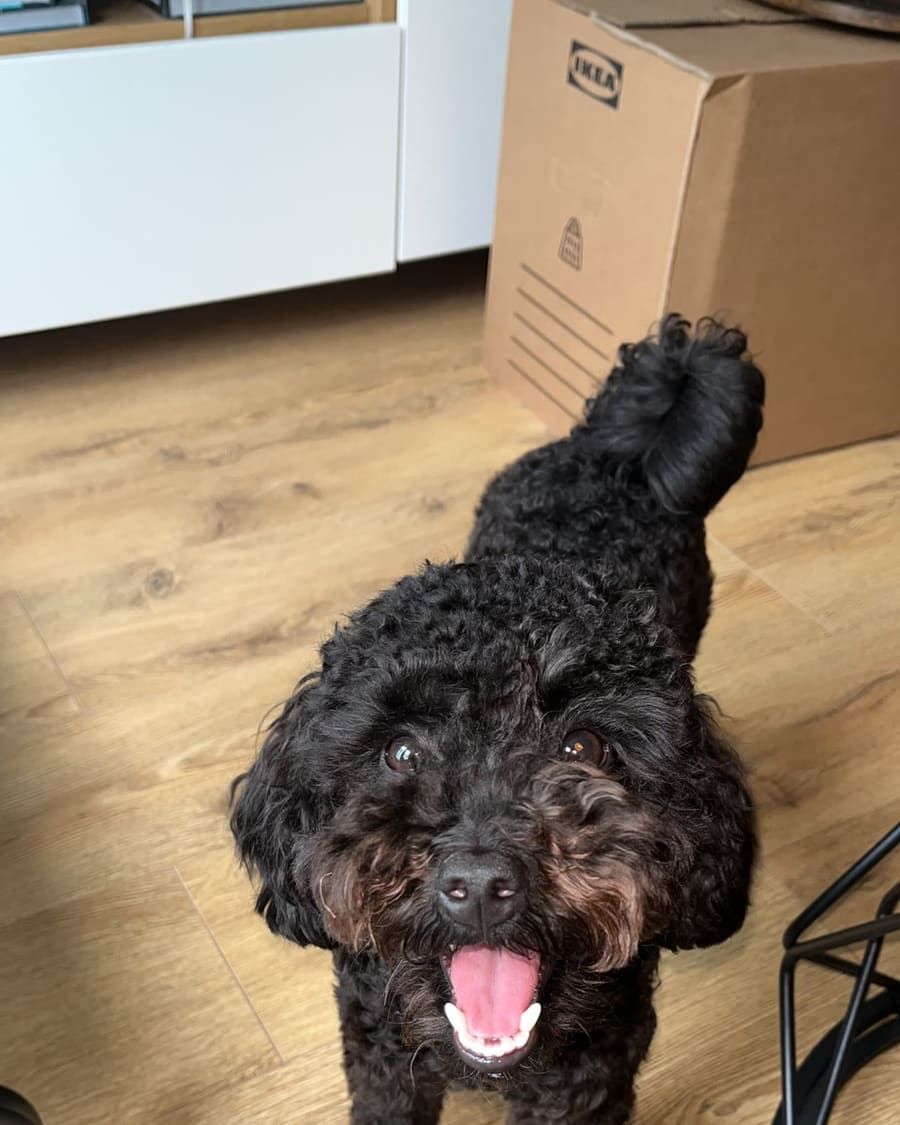
Keeping a Toy Poodle Warm in Winter: Coats, Cold Walks, and Paw Care
Small dogs feel the cold quickly. How to choose a coat that fits, walk safely on dark wet evenings, and protect paws from grit and salt, based on PDSA and Blue Cross advice.

It is a grey London morning and you are pulling on your gloves. Your toy poodle is already at the door, small and eager, with a coat of curls that does not look quite thick enough for the weather. Is it?
Many owners search for a dog coat for a toy poodle in the UK for this reason. Winter brings dark afternoons, wet pavements and gritted roads. Rolo is tiny, so a short walk can feel like a long one for him. It is easy to worry that you are getting it wrong.
This guide covers the basics of toy poodle winter care. It shows you how to keep a small dog warm in winter, from coats to paws to safer walks. The advice draws on PDSA and Blue Cross guidance.
Choose a winter dog coat that fits your toy poodle
PDSA says dogs with thinner coats and older dogs need extra warmth. It recommends a good winter coat for cold walks. Blue Cross says short-coated breeds like greyhounds can struggle in the cold. Neither guide singles out toy poodles, so use your own dog as the guide. If yours shivers, lifts his paws or slows down on cold days, a coat is worth trying.
Look for a coat that covers his back and chest. It should be easy to put on and take off. A waterproof outer layer helps on wet days. A jumper can be good for dry, cold ones.
Check the fit before you buy. You should be able to slide two fingers under the straps. The coat should not rub under his legs or stop him walking normally. It should not drag on the ground either. Measure your dog and check the size guide, because toy sizes vary between brands.
If you use a harness, check that the coat leaves room for it. Some coats have a hole for the lead clip.
Make winter dog walks in London safer
Short winter days mean many of us walk in the dark. PDSA recommends walking in daylight where you can. Blue Cross suggests a good flashing or reflective collar or harness. Wearing something bright yourself helps too.
LED collars and reflective leads are easy to find. Both help drivers and cyclists see you. They also help you spot your dog in the park.
Think about where you walk. Pavements are slippery when wet or icy, and a toy poodle has little weight to steady him. Keep him on the lead around water. PDSA warns that frozen ponds and lakes are dangerous but tempting for an excited dog.
Cut back the length of walks on the coldest days. Two short outings can be better than one long one. Dry him off when you get home, especially his tummy and legs.
Protect your poodle’s paws from grit and salt
Salt and grit spread on London roads in cold weather can irritate paws. Blue Cross says they can get between your dog’s toes and irritate the footpads. It also warns that road salt is toxic if your dog licks it off.
The fix is simple. Wipe or wash his paws when you get home, as both PDSA and Blue Cross advise. Do it every time, and check between the toes. If he licks his paws a lot, look closely for redness or soreness.
PDSA suggests a paw butter for protection. Blue Cross says winter boots can help protect paws from the cold. Not every dog accepts boots. Introduce them slowly indoors with treats.
Trimming the fur around the paws helps too. Both guides say it means less snow and ice gathers between the toes and pads.
Keep active indoors and avoid winter hazards
On bad days, stay in and play. PDSA advises mixing shorter walks with indoor play so your dog does not get less active. Blue Cross suggests puzzle feeders and games for mental exercise.
Watch the food bowl as well. PDSA says to reduce food if your dog is getting less exercise. Toy breeds put on weight quickly, so ask your vet if you are unsure about portions.
One serious hazard is antifreeze. PDSA calls it incredibly toxic and says it can kill. Keep it locked away, and clean up any spills. If you think your dog has swallowed any, contact your vet straight away.
Know the signs your poodle is too cold
Blue Cross says dogs may lift their paws or whine when their feet are freezing. Other signs of feeling cold include shivering, slowing down or refusing to walk. PDSA says to watch for hypothermia in extreme cold. If your dog seems very cold, sleepy or weak, warm him up gently and call your vet.
Do not wait until he is shaking. Head home at the first sign of discomfort.
Conclusion
A warm winter for your toy poodle comes down to a few habits. Put on a well-fitting coat, walk in daylight when you can, wipe his paws every time, and play indoors on the worst days.
Try this today: measure your dog’s chest and back length, and check them against a coat’s size guide. Then plan your first cold walk with a towel by the door.
Have a question or a story about your own toy poodle? Follow Rolo on TikTok and YouTube and get in touch there.
FAQs
Does my toy poodle need a coat in winter?
It depends on your dog. PDSA says dogs with thinner coats and older dogs need extra warmth. If yours shivers or slows down in the cold, a coat can help.
How do I know if a dog coat fits properly?
You should be able to slide two fingers under the straps. It must not rub, restrict movement or drag on the ground. Measure your dog before choosing a size.
How cold is too cold for a toy poodle?
There is no single number, as dogs differ. Watch your dog instead. Shivering, lifting paws or refusing to walk all mean it is time to go home.
Why is road salt bad for dogs?
Blue Cross says it can irritate the footpads and is toxic if licked off. Wipe his paws after walks so he does not lick it.
Are dog boots worth it?
Blue Cross says boots can help protect paws from the cold. Many dogs need time to accept them. Start indoors with treats.
Should I trim the fur between my poodle’s pads?
Both PDSA and Blue Cross say it helps stop snow and ice building up. If you are not confident, ask your groomer to do it.
Is it safe to walk my dog in the dark?
It can be, with care. Use a flashing or reflective collar or harness, and wear bright clothes. Stay on the lead and stick to routes you know.
What is the danger of antifreeze?
PDSA says it is incredibly toxic to animals and can kill them. Store it safely. See a vet at once if you think your dog has swallowed any.
Should I feed my dog less in winter?
PDSA says to reduce food if exercise drops. Ask your vet about the right portion for your toy poodle.
What can I do indoors when it is too cold to walk?
Try puzzle feeders and simple games, as Blue Cross suggests. Hiding treats around a room is a good start. Keep sessions short.


