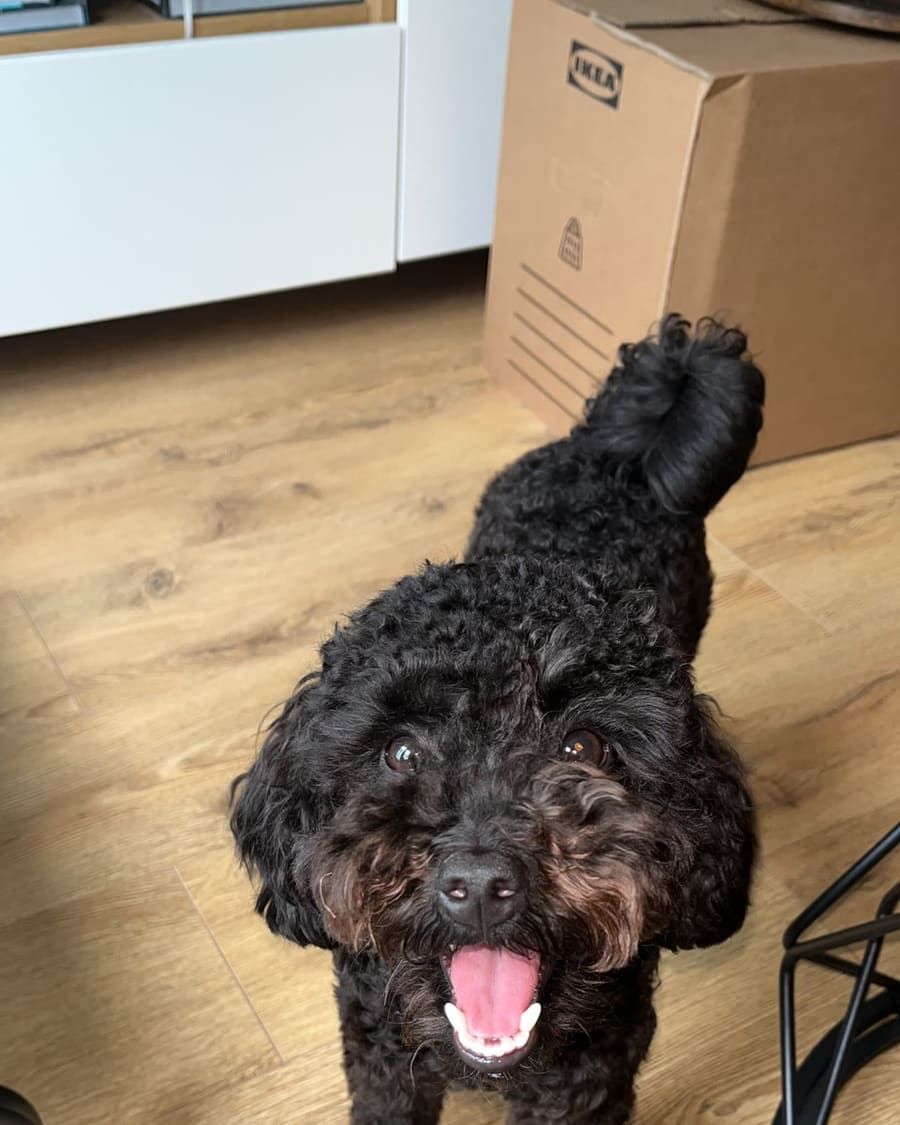
Why We Started Brushing Rolo's Teeth Every Day
Toy poodles have the highest odds of periodontal disease of any breed in a major UK vet study. Here's what that actually means, and the routine we settled on.

We didn’t take Rolo’s teeth seriously until a one-year checkup turned up early tartar. Our vet wasn’t surprised. Toy poodles, it turns out, are about as high-risk as it gets for this.
The actual numbers
A 2021 study of UK vet practice records, published in the Journal of Small Animal Practice and run through VetCompass, looked at periodontal disease across breeds. Toy Poodles came out with the highest odds ratio of any breed in the dataset: 3.97, meaning a toy poodle is roughly four times more likely to be diagnosed with periodontal disease than the baseline. Recorded prevalence specifically in Toy Poodles was 25.97%, the third-highest of any breed studied.
The same research flags something else worth knowing: the diagnosed rate across all dogs was only 12.52%, but the researchers estimate the real rate is somewhere between 44% and 100% once you account for underdiagnosis. Most dental disease doesn’t get caught until someone looks properly, usually under anaesthetic.
Why toy breeds specifically
The working explanation among vets is overcrowding. A toy poodle’s teeth are sized close to a bigger dog’s but packed into a much smaller jaw, which leaves less space between them for saliva and natural chewing action to clear plaque. That plaque hardens into tartar faster than it would in a dog with more room in its mouth.
What to actually watch for
Bad breath is usually the first thing an owner notices, and it’s a real signal, not just an unpleasant smell. Also worth checking for: red or swollen gums, visible yellow-brown buildup at the gumline, a dog dropping food or chewing on one side only, pawing at the mouth, or rubbing the face against furniture. Any of these is worth a vet visit, not a wait-and-see.
What actually works at home
Daily brushing with a dog-safe enzymatic toothpaste is the standard vets point to as the single most effective thing an owner can do. If daily isn’t realistic, three to four times a week is the floor that still makes a meaningful difference. Less than that and you’re mostly not doing anything.
The enzymatic toothpaste helps chemically break down plaque, but it’s an assist, not the main event. The actual mechanical brushing is what disrupts the plaque layer. No toothpaste, enzymatic or otherwise, dissolves tartar that’s already hardened. Once it’s hardened, only a vet scale-and-polish removes it.
Dental chews help too, but as a supplement to brushing, not a replacement for it. They don’t reach everywhere a brush does.
What it costs if you leave it too long
A routine scale-and-polish under general anaesthetic at a UK first-opinion practice typically runs £250 to £500, sometimes up to £600, with the anaesthetic itself being the main cost driver since it needs a vet, a nurse, and monitoring equipment. If the vet finds teeth that need extracting once your dog is already under, that adds roughly £30 to £80 per tooth, and a complicated case with multiple extractions can push the total to £600 to £1,200 or more. Since March 2026, UK vet practices are legally required to give a full written estimate before any treatment expected to cost over £500, which is worth asking for upfront.
What we actually do
A finger toothbrush and enzymatic toothpaste kit, most days. We’re honest that “most days” isn’t literally daily, but it’s consistently at least four times a week, which is enough to keep the tartar our vet first flagged from coming back.
FAQs
Do dental chews replace brushing? No. Vets treat them as a supplement. They help mechanically but don’t reach everywhere brushing does, and they don’t substitute for the daily habit.
Can toothpaste remove tartar that’s already built up? No. Toothpaste, including enzymatic formulas, works on plaque before it hardens. Once it’s tartar, only a professional scale-and-polish removes it.
How do I know if my dog needs a dental clean now rather than later? Red or bleeding gums, visible tartar at the gumline, bad breath that’s new or worsening, or a dog that’s suddenly reluctant to chew are all reasons to get a vet opinion rather than waiting for the next annual check.
Sources: O’Neill et al., “Epidemiology of periodontal disease in dogs in the UK primary-care veterinary setting,” Journal of Small Animal Practice, 2021 (VetCompass); UK first-opinion vet practice pricing data, 2026.


