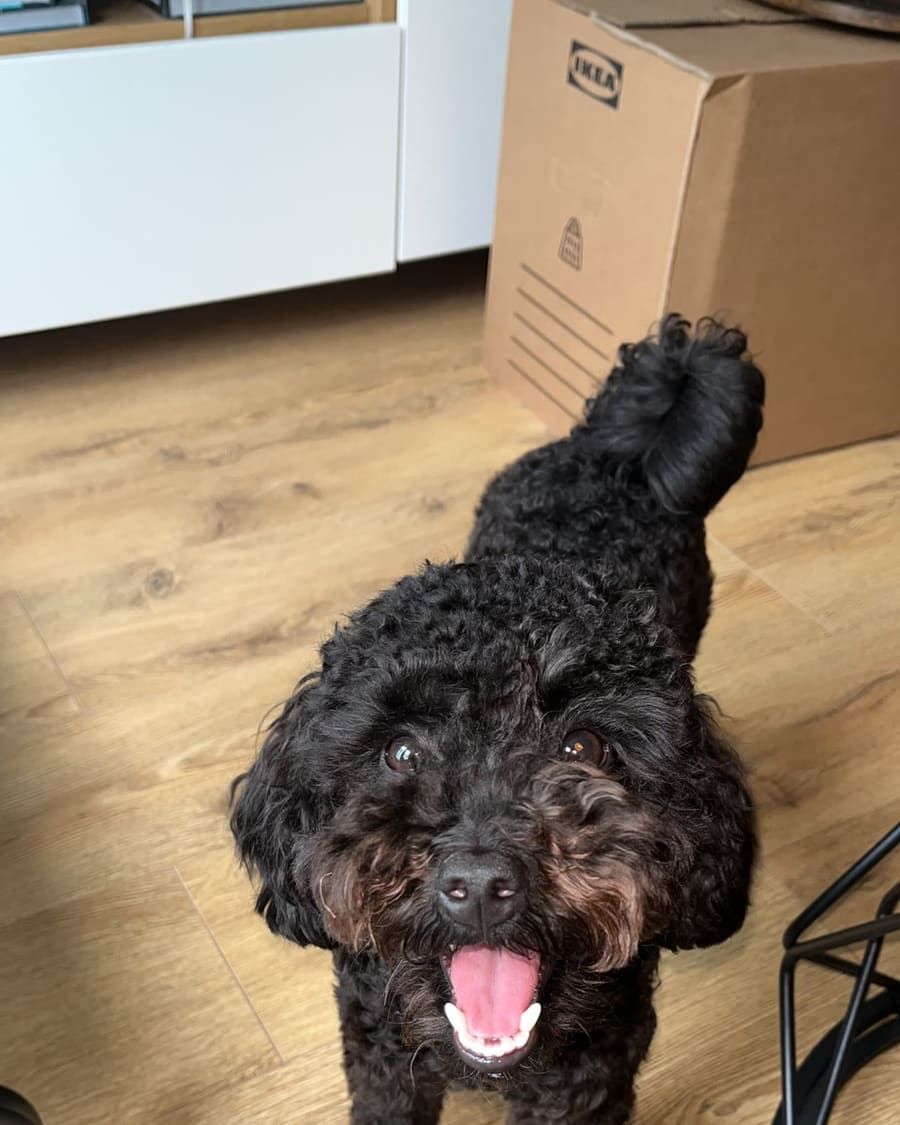
Toy Poodles vs. Miniature Poodles: Which is Right for Your Flat?
The Kennel Club puts toy poodles under 28cm and miniatures at 28-38cm, but the gap matters more in a flat than it does on paper. Here's how to actually choose.

You have found a flat you love. Now you want a dog. You open a search and see two poodles that look almost the same, one called toy and one called miniature. Which one belongs in your home?
It is a bigger question than it sounds. The wrong match can mean cramped rooms, tired legs or unhappy neighbours. A dog that is too lively for your routine will let you know. So will a dog that needs more company than you can give.
I faced the same choice before Rolo arrived, so I know how muddled it gets. Toy poodle size and miniature poodle size sit close together, and photos can be misleading.
This guide compares the toy poodle vs miniature poodle in plain terms: the real size differences, exercise needs, grooming and health points, and how each copes with flat life. By the end you will know which one best fits the dog in your head, and the home you have.
Toy poodle size vs miniature poodle size: the numbers
Size is the main difference, so start there. The UK Kennel Club sets height limits for each. A toy poodle stands under 28cm at the shoulder. A miniature poodle is between 28cm and 38cm. The standard poodle is larger again.
That gap sounds small on paper. In your flat it is noticeable. A toy fits on your lap, and a miniature is a sturdier dog with longer legs.
Weight gives a rough guide too. PetMD describes toy poodles as about 4 to 6 pounds, which is around 2 to 3kg. Miniatures are about 10 to 15 pounds, so roughly 4.5 to 7kg. Individual dogs vary, so treat these as ballparks.
Size affects daily life. A toy needs less floor space and a smaller bed. It also needs more care around furniture, stairs and big dogs, because small bones can be hurt by a fall or a rough greeting. A miniature copes with a bit more rough and tumble.
Both are still small dogs. If a poodle sounds right but you want something compact, either can work in most flats.
Exercise needs and energy: which poodle fits your day?
Both are active, clever dogs. Neither is a couch ornament.
PetMD suggests about 30 to 45 minutes of daily exercise for a toy poodle, and 30 to 60 minutes for a miniature. That might be a brisk walk, some fetch or a swim. A miniature may want a little more, including short runs.
Those numbers are a guide, not a rule. Age, health and personality all change the picture. A young miniature may race around the park for an hour. An older toy might be happy with two gentle strolls.
Mental exercise counts as much as physical. Poodles are bright and get bored easily. Puzzle toys, scent games and short training sessions help a lot, especially on wet London days when you cannot get outside for long.
If you work from home or have a flexible week, either size can fit. If your days are long and your walks are short, a toy may be easier to keep happy. Also think about how you will manage when you are out. Poodles love company and may struggle with long gaps alone.
Grooming, lifespan and health compared
Grooming is the same for both. Poodles have curly coats that need regular care. Plan for daily brushing to prevent matting, plus professional grooming every few weeks, on roughly the same schedule either size needs. Many owners like that poodles shed little, but low shedding does not mean low maintenance.
Lifespan is a pleasant surprise. PetMD gives 12 to 18 years for toy poodles, and 13 to 15 for miniatures. Small dogs tend to live a long time, which is a big commitment but a wonderful one.
Health differs slightly. Smaller dogs often have dental problems, because their teeth sit close together in a small mouth, which is why we brush Rolo’s teeth every day. Toy poodles can also have kneecap problems, so ask your vet to check your dog’s joints at routine visits.
Choose a breeder who health-tests and lets you meet the puppy’s parents. Or look at rescues that home poodles. Ask the vet about vaccinations, microchipping and insurance early.
Neither size is automatically healthier. Good breeding and good care matter more than the label.
Living in a flat: noise, stairs and neighbours
Flat life suits poodles well, as long as their needs are met. Small size helps, but behaviour matters more.
Barking is the big one. Poodles can be vocal, and thin walls carry sound. A bored or lonely dog barks more. Early training, plenty of exercise and a calm routine make a big difference. Teach a quiet cue and reward calm behaviour. If barking becomes a problem, ask a qualified trainer for help.
Stairs are the next point. A toy poodle needs care on steep steps, so think about carrying your dog or using a gate. A miniature can handle stairs more easily, though puppies should still avoid too many.
Then check your lease. Some leaseholds restrict pets, or need written permission. Read it before you commit, and ask your landlord or managing agent if unsure.
Think about outdoor access too. Where will your dog toilet in the morning, at lunchtime, and last thing at night? A flat near a green space makes everything easier.
Both sizes can thrive in a flat. A toy wins on space. A miniature wins on sturdiness.
Final thoughts
Toy and miniature poodles share the same brains and the same curls. The choice comes down to size, energy and what your home allows. Choose a toy if you want maximum compactness. Choose a miniature if you want a sturdier dog with a little more stamina.
This week, measure your daily routine honestly. How many hours are you out? How far can you walk each day? Write it down, then match it to the dog you have in mind.
Whichever you pick, you are getting a clever, loving companion. Rolo has taught me that size matters far less than the bond.
FAQs
What is the size difference between toy and miniature poodles?
The Kennel Club sets a toy poodle at under 28cm tall and a miniature at 28cm to 38cm. Miniatures are also usually heavier.
How much does a toy poodle weigh?
PetMD gives about 4 to 6 pounds, which is around 2 to 3kg. Individual dogs vary, so ask your vet for guidance on a healthy weight for your dog.
Which poodle needs more exercise?
Miniatures usually need a little more. PetMD suggests 30 to 45 minutes daily for a toy and 30 to 60 for a miniature. Both also need mental games.
Which is better for a small flat?
Either can work. A toy takes up less space. A miniature is sturdier. Your routine and your lease matter more than the extra few centimetres.
Do poodles bark a lot?
They can. Boredom and loneliness make it worse. Exercise, training and a steady routine help keep noise down for your neighbours.
Do poodles shed?
Very little. But they need daily brushing and regular grooming, because the curly coat mats easily.
How long do poodles live?
PetMD gives 12 to 18 years for toy poodles and 13 to 15 for miniatures. Good care and regular vet visits help your dog live a long, healthy life.
Are poodles good for first-time owners?
Many first-time owners do well with them. They are clever and eager to learn. They do need time for training, grooming and company.
Can a toy poodle manage stairs?
Adults usually can, with care. Puppies and very small dogs may need help, such as a stair gate or being carried.
Do I need permission to keep a dog in my flat?
Check your lease or tenancy agreement. Some restrict pets or need written permission. Ask your landlord or managing agent before you bring a dog home.


